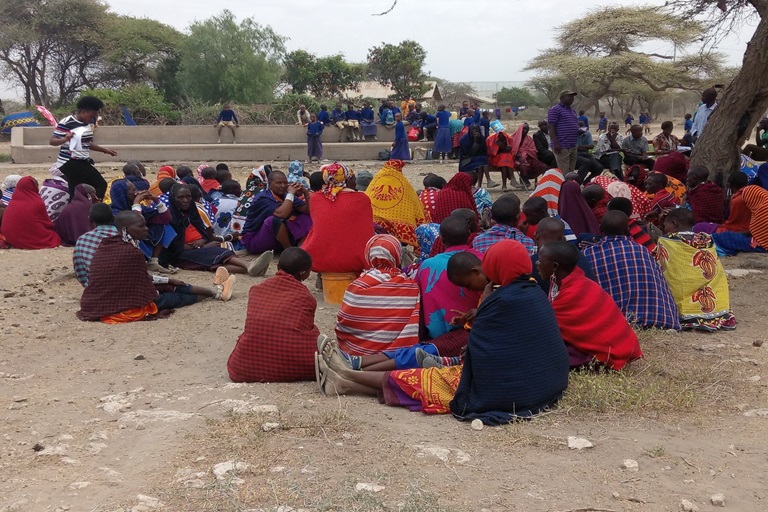
The climate change project was important to the Maasai community in Longido District. It was supported by GEF through UNDP and implemented by TAEEs in the three villages of Engikaret, Kiserian and Ngereyani, benefiting about 5,345 people.
The project planted climate-resilient tree species at primary and secondary schools, where watering and management could be undertaken more easily, as well as at the district headquarters. A total of 2,100 trees were planted, comprising 1,050 Croton megalocarpus, 300 Cordia africana (Mlingalinga), 550 Markhamia lutea and 200 Albizia species (Msesewe).
Through project training, 158 participants, including 66 men and 92 women, gained knowledge on climate change impacts and adaptation mechanisms which include planting and managing trees around their homes and institutions. The training demonstrated how tree planting can support efforts to combat desertification and drought, strengthen windbreaks and increase the capture of dust, thereby reducing dust intensity around households.
The project is estimated to have increased Longido District’s carbon sink by sequestering approximately 47,628 kg of CO₂ per year, contributing to efforts to address climate change and reduce greenhouse gas emissions. Approximately 3.5 ha were covered by the project’s tree-planting activities, supporting local initiatives to combat desertification. Beekeeping activities also encouraged the protection and restoration of natural forests and vegetation cover, strengthening community adaptation to climate change.
The project further supported poultry farming by providing 300 chickens to formed and registered community groups. The groups were also assisted to open bank accounts for the safe management of income generated from their activities. The intervention produced a multiplication effect, with each group member acquiring 5–8 chickens and an additional 200 chickens being raised within the first 2 months, on top of the original 300 chickens provided.
By the end of the project, women had started earning income from selling eggs within their communities. Families also used some of the eggs for household consumption, improving nutritional value, particularly for children.